A new study by the Re:People/Public Policy Research Centre, Between Public Health and Security: An Analysis of Post-Crisis Measures Following the 2023 Mass Shootings, authored by Filip Stojanović, shows that the state response after the tragedies at the “Vladislav Ribnikar” primary school and in the villages of Malo Orašje and Dubona was swift and politically forceful, but did not develop into a consistent, institutionally embedded, and long-term sustainable reform of security policy.
The analysis shows that the reform package was predominantly securitised: violence was defined as an acute threat requiring urgent, restrictive, and symbolically strong interventions. The voluntary weapons surrender campaign produced impressive quantitative results, while the presence of police officers in schools had a strong symbolic and psychological effect. However, these measures were generally not followed by systematic evaluation, clear indicators of success, or transparent public reporting on their actual effects.
In the area of arms control, the analysis points out that there are no publicly available reports that would allow an assessment of the scope and effects of the licence review process, nor data on the actual number of confiscated licences, the reasons for confiscation, or the impact of stricter penalties on the illegal arms market. At the same time, the reform focused predominantly on legally registered weapons, while the issue of illegal weapons was not addressed through structural and long-term control mechanisms.
With regard to school safety, the study shows that the deployment of police officers had a calming and stabilising effect, especially in the period immediately following the tragedy, but that there are no publicly available and systematic data showing that this measure led to a reduction in peer violence, changes in school climate, or stronger preventive capacities within the system. Interviewees in the study further noted that police officers assigned to schools had not received adequate training for working with children, and that this duty had been added to their regular police work as an additional burden.
A particularly serious finding concerns post-crisis support for families affected by the tragedy. The analysis shows that assistance to families did not follow a centrally organised, long-term, and coordinated model of psychosocial and administrative support, but often depended on personal contacts and individual initiatives. Nearly three years after the events, no institutionalised form of permanent psychological support has been established, nor a coordinated rehabilitation model for the many injured people living with lasting physical and psychological consequences.
The study also shows that during the period analysed, no publicly available performance indicators were established for measures related to youth safety, nor were formalised mechanisms of regular consultation between state institutions and civil society put in place. Although civil society organisations, research centres, and expert initiatives contributed to sustaining public debate, they were not systematically included in formal decision-making processes or in the evaluation of implemented measures.
Based on the analysis, the study recommends a shift from occasional actions and crisis-driven mobilisation towards systemic risk governance in arms control, the development of an integrated preventive model of school safety, the establishment of a national programme for youth safety, the institutionalisation of post-crisis psychosocial support, the introduction of mandatory evaluation of security measures, and stronger democratic oversight and public participation in reform processes.
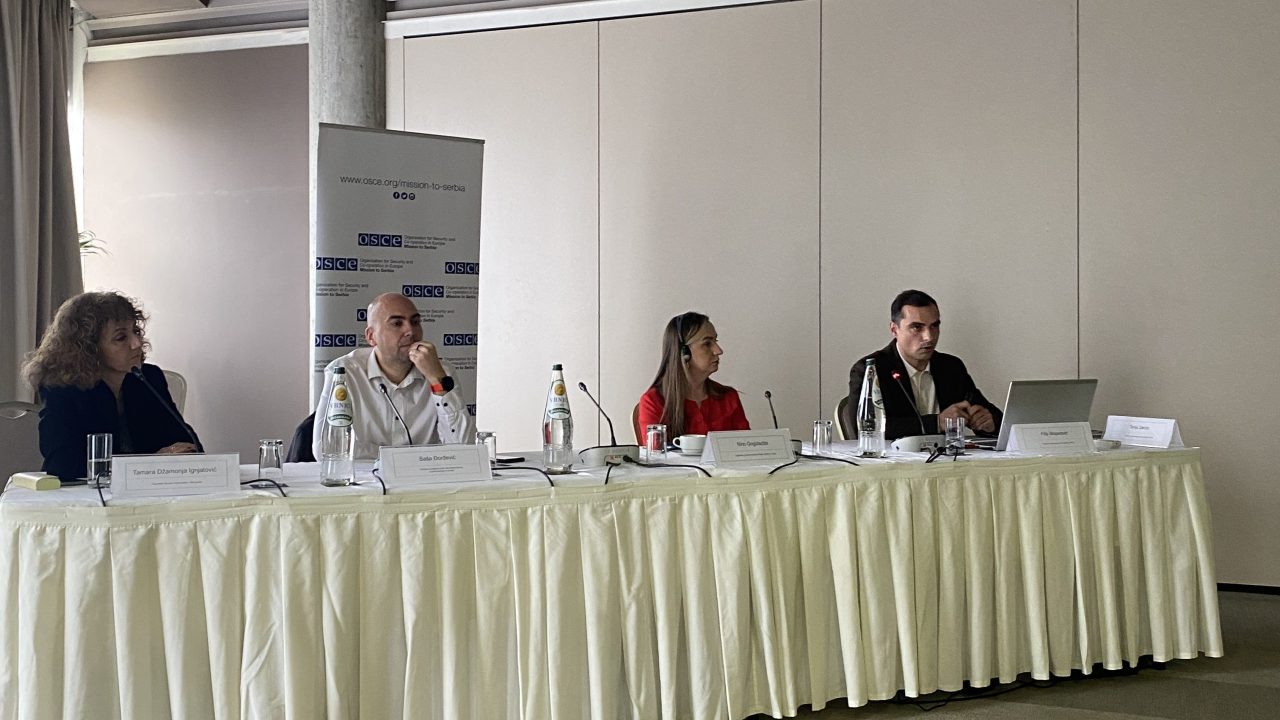
The analysis is based on official data, a discourse analysis of statements by state actors, an analysis of media coverage, as well as five expert interviews and one focus group with representatives of institutions and civil society. This study continues the Re:People/Public Policy Research Centre’s advocacy work in the area of small arms control. The project was implemented with the support of the OSCE Mission to Serbia and with financial support from the Government of Sweden. The views expressed in the analysis are solely those of the author and do not necessarily reflect the official position of the OSCE Mission to Serbia.
You can read the full study at the following link.
An infographic with the most important results can be viewed at the following link.