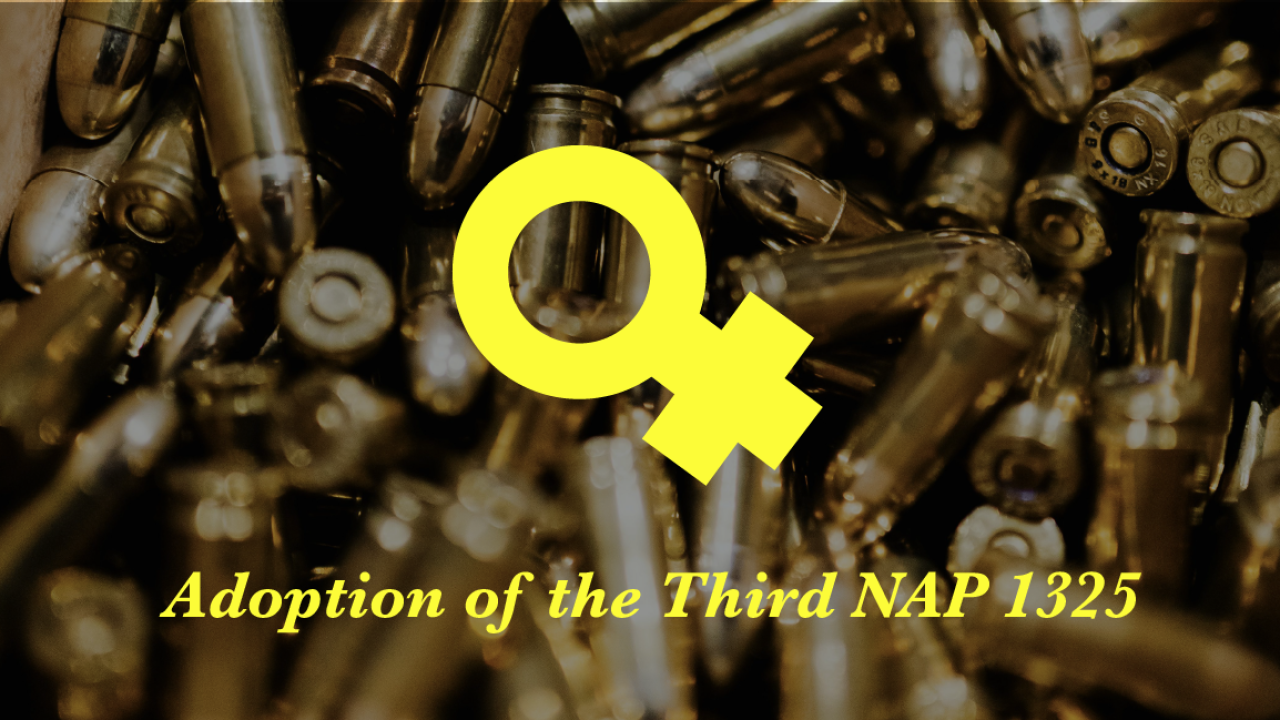
On April 11, 2025, the Government of the Republic of Serbia adopted the third National Action Plan for the implementation of the United Nations Security Council Resolution 1325 – Women, Peace and Security (NAP 2025–2027).
The Center for Research of Public Policies (CRPP) participated in the interdepartmental working group and consistently advocated for improvements in two interconnected areas: the misuse of small arms and light arms, and the impact of climate change and environmental degradation on women’s security. Both topics are partially recognized in the adopted NAP.
In the area of arms, the NAP introduces a measure for the prevention and control of the misuse of firearms in both legal and illegal possession (Measure 2.3). This aligns with previous assessments that small arms and light arms control policies must take gender differences and the consequences of firearm-related violence into account. Serbia has already identified that the possession and misuse of these arms have clear gendered dimensions, and the previous NAP included a measure related to societal disarmament and the illicit arms trade—an important starting point for strengthening preventive approaches in the new cycle.
Climate change and other crises are recognized in the section on strengthening institutional capacities through improving knowledge of emerging security challenges, as well as through encouraging research on risks faced by women in emergency situations. This orientation corresponds with the findings of the final evaluation of the second NAP, which emphasize the need to enhance the resilience and protection of women in conditions of natural and other disasters and to more closely link prevention, protection, and recovery policies to real crisis scenarios.
At the same time, the NAP lacks elements that would make it more operational: clearer and measurable indicators are missing, activity-specific funding is not precisely planned, and the coordination, monitoring, and reporting structure remains overly complex rather than functional.
In the final phase of adoption, the principles of transparency and the involvement of civil society organizations were not fully upheld. CRPP considers it essential in the next phase of implementation to ensure regular and public monitoring mechanisms, including the participation of civil society and academia in reporting and evaluation, in line with recommendations for centralized monitoring and broader stakeholder engagement.
In the coming period, CRPP will continue its work as part of the civil society network Network 1325 and will monitor the implementation of NAP 2025–2027. We will particularly insist that the issues of arms and climate change be systematically integrated into all four areas of the NAP: institutions and actors, prevention, participation, protection, and recovery. In practice, this means developing precise indicators for reducing firearm-related risks, ensuring budgeted trainings and campaigns, as well as conducting regular research and emergency-risk simulations.
The work of Network 1325 was supported by the OSCE Mission to Serbia, which also provided support to CRPP during research on the misuse of firearms in legal and illegal possession in cases of domestic violence, as well as on the gender dimensions of climate change.